waterbuck south africa 2

Waterbuck


Information about Waterbuck

The waterbuck is a large antelope species native to sub-Saharan Africa, easily recognizable by the distinctive white ring of fur encircling its rump. Preferring habitats near water sources, such as rivers, lakes, and wetlands, waterbucks are strong swimmers and often seek refuge in water when threatened by predators. Their shaggy, coarse coat is oily and water-resistant, which helps them thrive in these damp environments.

Pictures of Waterbuck

waterbuck south africa 4
waterbuck south africa 6
waterbuck south africa

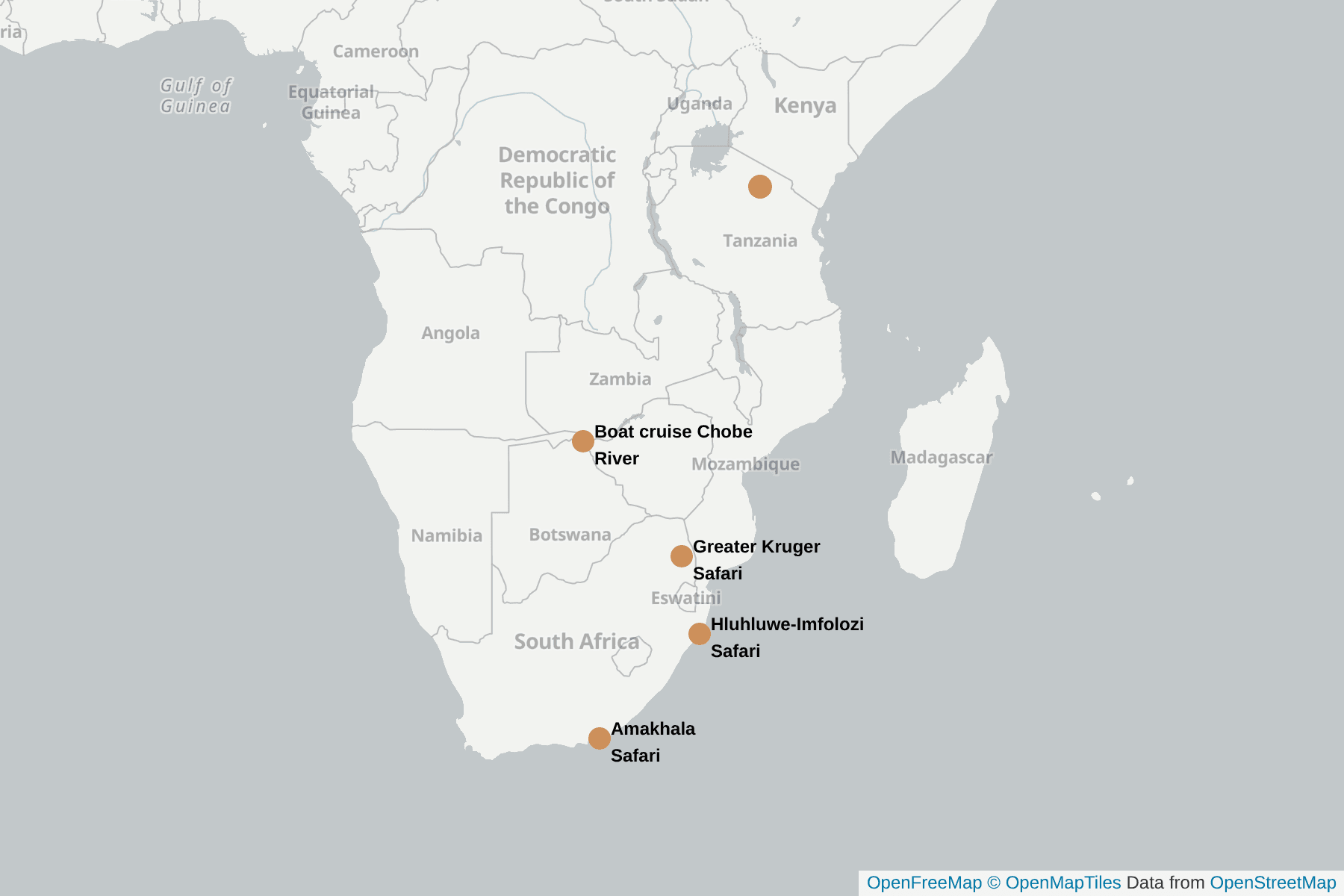
Highlights where the Waterbuck can be seen

Elephant Amakhala Game Reserve
Amakhala Safari

While staying in Amakhala, you will go on morning and evening game drives leaving from your lodge. You will be guided by informative, professional rangers through Amakhala Game Reserve in open Land Rovers. Here you can return to nature and explore the abundant wildlife, the diverse vegetation and the dramatic landscape of the Eastern Cape. On Amakhala Game Reserve's 18 000 acres the animals that you are likely to encounter are: lion, elephant, rhino, buffalo, cheetah, giraffe, zebra, wildebeest, monkeys, tortoise and plenty of antelope species.

Hippos in St Lucia Lake
Boat cruise Chobe River

Embark on a boat cruise on the Chobe River. Good chance you will see plenty of hippos, elephants, and other wildlife along the banks of this majestic river. Avid photographers love this place because it offers excellent circumstances to photograph the iconic image of a hippo showcasing its massive teeth. Will you be so lucky to catch this moment on camera?

Bush Walk Manyara
Bush walk in Lake Manyara

You leave with your ranger for a walking safari of about 2 hours. You enjoy the scenery, the views of the lake and of course if you are lucky, the wildlife. Your guide teaches you how to recognize the different animal tracks and also the characteristic flora of the bush.

The thrill of encountering wildlife on foot is very different from that of a game drive. Here are some of the animals you may see on this walking safari: giraffes, elephants, turtles, zebras, buffalo, antelopes, hippos etc. Your ranger will take care of your safety and your French speaking guide will accompany you for translation. Enjoy !

nDzuti Safari Camp, Maseke Game Reserve
Greater Kruger Safari

There are numerous of private concessions surrounding the Kruger National Park, which give a more private experience compared to the sometimes crowded National Park. We are especially charmed by Maseke Game Reserve, as it is situated within a vast block of wilderness, where wildlife can roam freely from the different reserves surrounding it.

White Rhino
Hluhluwe-Imfolozi Safari

The Hluhluwe–iMfolozi Park is one of South Africa’s most celebrated wildlife destinations, offering unforgettable encounters with some of Africa’s most iconic animals. Spanning rolling hills, open grasslands, dense forests, and river valleys, the park is home to the legendary Big Five — lion, leopard, elephant, buffalo, and rhino — along with cheetahs, giraffes, zebras, wildebeest, hippos, crocodiles, and countless bird species. Visitors can experience the thrill of spotting wildlife in their natural habitat while exploring one of the oldest and most scenic game reserves in Africa. Famous for its outstanding rhino conservation efforts and rich biodiversity, Hluhluwe-iMfolozi offers a true safari adventure in the heart of Zululand.

Crater
Ngorongoro Crater

The Ngorongoro caldera is about 20km in diameter. It is the remains of a volcano that has been inactive for over 3,000 years. Many animals live in this environment, including numerous herds of buffalo, wildebeest and zebra. Hyenas, jackals and wild dogs are also seen quite regularly. The felines (lions and leopards), present, are rarer to observe, but the numerous carcasses are witnesses of the activity of the fauna. The elephants observed are mostly old elephants that come here to retire. There are about 20 black rhinos, one of the last places where they can be seen from a distance in Tanzania.

Lake Manyara
Safari at Lake Manyara

Manyara Park is a small national park in Tanzania of 325 km2. It differs from other parks by the presence of a lake, Lake Manyara, but also by its forest type vegetation. There are some typical species such as the blue monkeys or several species of birds including the hornbill. We can see elephants, giraffes, many antelopes, buffalos, hippos, different types of monkeys, zebras etc. Lions, leopards and hyenas are present but very difficult to observe due to the vegetation.

Tarangire elephants
Safari at Tarangire National Park

Tarangire means "the river of the warthogs", this name was given by the Mbugwe tribe who used to fetch water from the river in the park. Tarangire with its 2,800km2 is relatively small compared to the Serengeti, another very well known park in the country. This makes for a pleasant safari with few roads and abundant wildlife. The characteristic landscapes of the park are swampy which allows in dry season to find the animals around the water points.

You can observe in this park all the characteristic animals of the African savannah but the stars of this park are the elephants with more than 5 200 recorded. On the flora side, one can admire many baobabs of all sizes.

Lions in serengeti
Safari in Serengeti

Serengeti means "endless plains". The park covers almost 15 000km2. It is characterized by desert savannah landscapes over several kilometers that seem endless. For this reason, the observation of the cats is particularly suitable. Many lions are present in the park, which guarantees a 100% chance to observe the king of the savannah. Some even got into the habit of climbing trees to take a nap. Leopards and cheetahs are also regularly seen. The luckiest ones will witness the scenes of a shrine.

Although the cats are the stars of the Serengeti, other animals such as jackals, hyenas, ostriches, hundreds of gazelles of various types, families of elephants and many hippos are also seen. The ponds are filled with hippos and crocodiles.

Our trips to spot the Waterbuck