panther chamaleon

The panther chameleon in Madagascar


Information about Panther chameleon

The panther chameleon (Furcifer pardalis ) is a species of chameleon found in the eastern and northern parts of Madagascar in a tropical forest biome. Their coloration varies with location, and the different color patterns of these chameleons are commonly referred to as 'locales', which are named after the geographical location in which they are found. Panther chameleons can be vibrant blue, red, green, or orange. Panther chameleons are solitary and very territorial. They spend the majority of their life in isolation, apart from the mating season.

Interesting facts about Panther chameleon

Panther chameleons are carnivores (insectivores). Their diet consists of insects, small birds, and other reptiles.

The generic name of this species (Furcifer) is derived from the Latin root "furci" meaning "forked" and refers to the shape of the animal's feet. The specific name "pardalis" refers to the animals' markings, as it is Latin for "leopard" or "spotted like a panther".

When Panther chameleons locate their prey, both eyes can be focused in the same direction, giving sharp stereoscopic vision and depth perception. They have keen eyesight for reptiles, letting them see small insects from a long (5-10 m) distance.

Pictures of Panther chameleon

panther chamaleon
Cameleon Madagascar
panther chamaleon

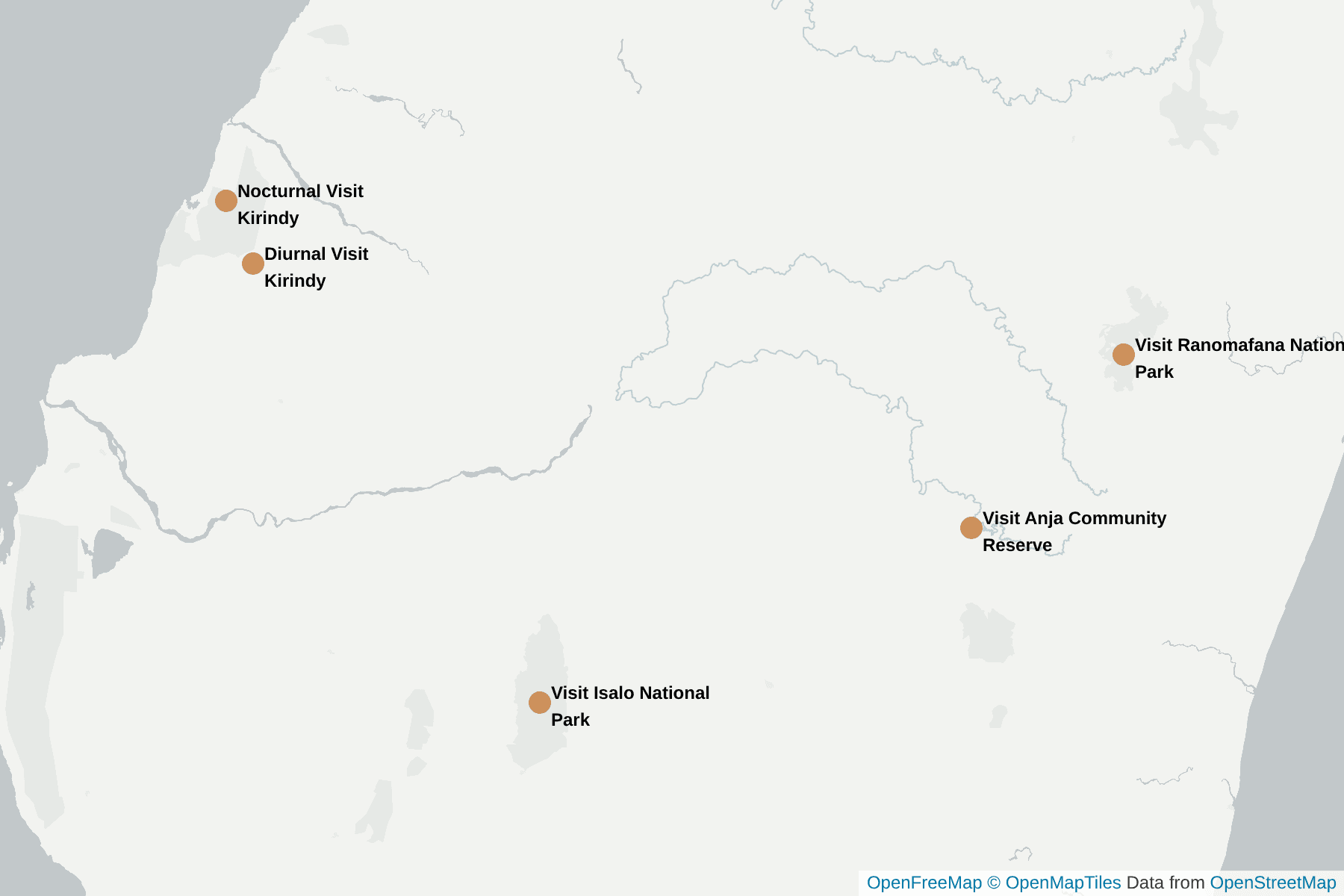
Highlights where the Panther chameleon can be seen

Kirindy
Diurnal Visit Kirindy

A visit to Kirindy Forest during the day offers a completely different but equally captivating experience. As the sun illuminates the dry deciduous forest, you’ll have the chance to encounter a variety of Madagascar’s unique wildlife, including the rare Verreaux's sifaka, red-fronted lemurs, and a host of colorful birds. The forest's distinct landscape, with its towering baobabs and dense vegetation, provides a stunning backdrop for exploring on foot. Daytime also offers better visibility for spotting the park’s reptiles, including chameleons and snakes, while the fossa, Madagascar’s largest predator, may occasionally be seen resting in the shade.

Kirindy
Nocturnal Visit Kirindy

Visit the Kirindy Forest during nighttime! As darkness falls, the park comes alive with nocturnal creatures. On foot, guided by a knowledgeable ranger, you’ll explore the dense forest, with the chance to spot Madagascar’s famous nocturnal residents like the elusive fossa, various lemur species, chameleons, and other reptiles. The cooler night air adds a sense of mystery, and the soft sounds of the forest heighten your senses, making every rustle and movement exciting. It’s an unforgettable opportunity to witness Madagascar's wildlife in its most active hours.

Lemur Madagascar
Visit Anja Community Reserve

The small Anja Community Reserve is a very successful ecotourism story. The local farmers stopped burning the area about twenty years ago, and have since ensured that a few large groups of ring-tailed lemurs can survive in the forest hidden between the rocks. Anja has become a vital example of how community management of natural resources can both effectively protect the area and benefit the community. Throughout the morning, you will be guided through the park by a skilled guide.

Isalo National Park Madagascar
Visit Isalo National Park

Within the southwestern Ihorombe region, this national park is known for its varied and unique terrain. Centuries of wind and rain erosion have whittled the landscape of Isalo National Park into a series of deep gorges, vast canyons and bizarrely shaped sandstone rock formations, punctuated by palm-lined oases and sprawling grasslands. Besides the striking vistas the park affords, visitors will also be able to enjoy cooling off in the natural swimming holes dotted across it and catch glimpses of the resident lemurs and other endemic wildlife species.

Ranomafana park
Visit Ranomafana National Park

Visit Ranomafana National Park: one of Madagascar’s most popular national parks and a UNESCO World Heritage Site. The tropical rainforest features an array of rare and exotic fauna and flora. The park is home to twelve species of lemur, one of which is the critically endangered Golden Bamboo Lemur, discovered here only in 1986.

Our trips to spot the Panther chameleon