Etosha National Park Namibia

Spot Black Rhino

Impressive and endagered


Information about Black Rhino

Black rhinos are the smaller of the two African rhino species. The most notable difference between white and black rhinos are their hooked upper lip. This distinguishes them from the white rhino, which has a square lip. Black rhinos are browsers rather than grazers, and their pointed lip helps them feed on leaves from bushes and trees.

Interesting facts about Black Rhino

Black rhinos have poor eyesight, and cannot easily detect an observer standing more than 30 metres away.

They can move extremely fast and have been recorded at highs of 55 km/h.

Black rhinos live up to 30-35 years in the wild and 35-45+ years in captivity.

Pictures of Black Rhino

Etosha National Park Namibia
Black Rhino
Black Rhino

Highlights where the Black Rhino can be seen

Etosha National Park Namibia
Gamedrive in Etosha

Going on a game drive in Etosha is an experience to never forget. Vast, open plains as far as the eye can see, with in the middle a massive salt pan. This lack of vegetation and water makes it very easy to spot wildlife! Big game is often seen at the waterholes, and there is no chance you can miss the iconic outline of an elephant on the horizon.

White Rhino
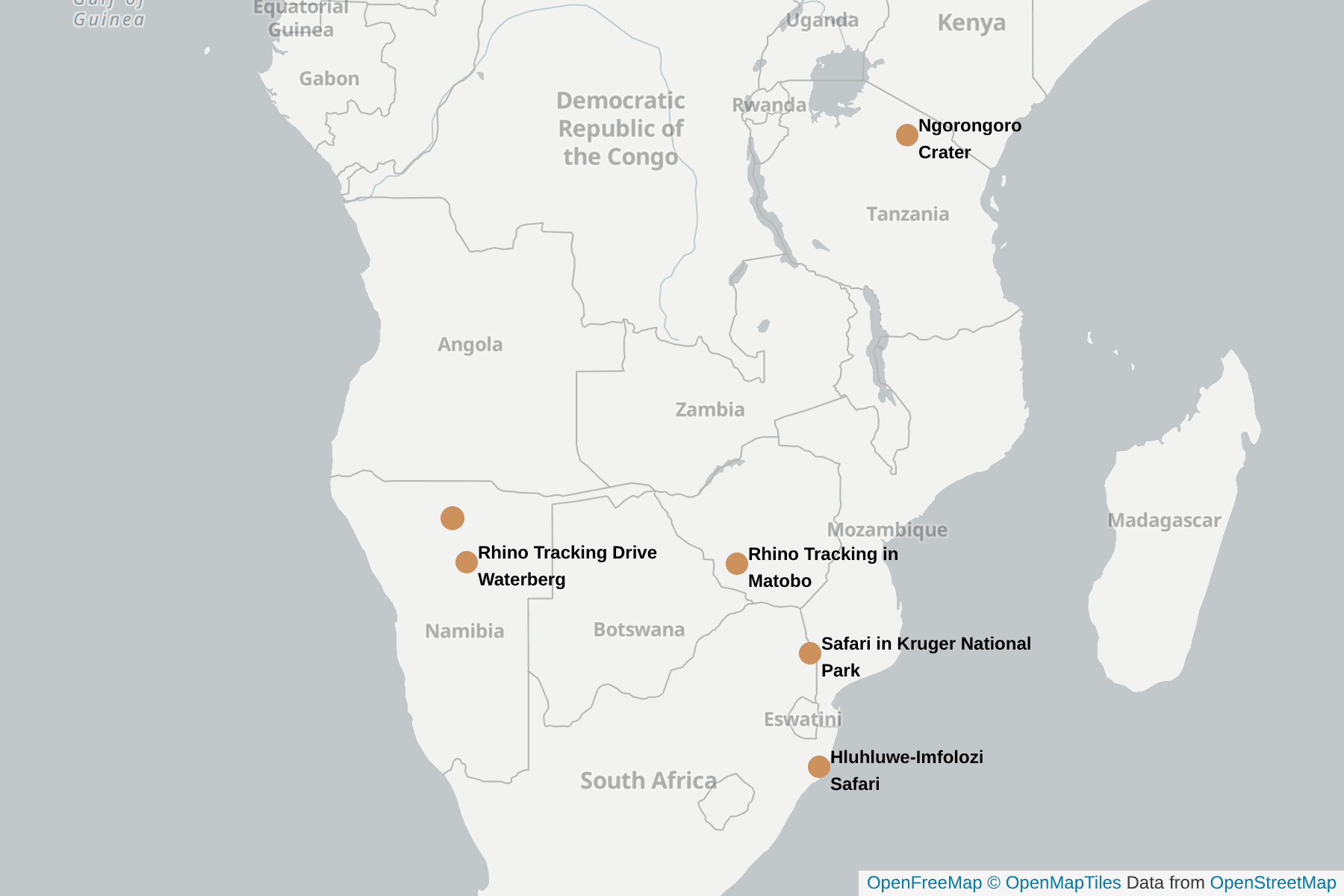
Hluhluwe-Imfolozi Safari

The Hluhluwe–iMfolozi Park is one of South Africa’s most celebrated wildlife destinations, offering unforgettable encounters with some of Africa’s most iconic animals. Spanning rolling hills, open grasslands, dense forests, and river valleys, the park is home to the legendary Big Five — lion, leopard, elephant, buffalo, and rhino — along with cheetahs, giraffes, zebras, wildebeest, hippos, crocodiles, and countless bird species. Visitors can experience the thrill of spotting wildlife in their natural habitat while exploring one of the oldest and most scenic game reserves in Africa. Famous for its outstanding rhino conservation efforts and rich biodiversity, Hluhluwe-iMfolozi offers a true safari adventure in the heart of Zululand.

Crater
Ngorongoro Crater

The Ngorongoro caldera is about 20km in diameter. It is the remains of a volcano that has been inactive for over 3,000 years. Many animals live in this environment, including numerous herds of buffalo, wildebeest and zebra. Hyenas, jackals and wild dogs are also seen quite regularly. The felines (lions and leopards), present, are rarer to observe, but the numerous carcasses are witnesses of the activity of the fauna. The elephants observed are mostly old elephants that come here to retire. There are about 20 black rhinos, one of the last places where they can be seen from a distance in Tanzania.

Waterberg Wilderness Waterberg Valley Lodge
Rhino Tracking Drive Waterberg

Go on a guided drive through the African bush savannah at the foot of the Waterberg, in search of the elusive Rhino. You can even get off the vehicle to always rub shoulders with the rhino. With a little luck you will also encounter game such as giraffe, oryx and eland, red hartebeest, blue wildebeest and kudu.

White Rhino
Rhino Tracking in Matobo

Go Rhino Tracking in the Intensive Protection Zone in Matobo Hills National Park. Here, a large population of Black and White Rhinoceros are successfully breeding. Seeing these endangered creatures is truly humbling, and the efforts going into their protection are inspiring. You will track rhino on foot. One of the rangers will take you on a guided drive through the bushland, in search of the elusive Rhino. Once found, you will be allowed to get off the vehicle for an encounter on foot. Can you imagine almost rubbing shoulder with a rhinoceros?

Kruger & Greater Kruger 1
Safari in Kruger National Park

A day safari in the Kruger National Park begins early in the morning, when the bush is alive with movement and the light is perfect for spotting wildlife. From your open 4x4, you might see elephants gathering at a waterhole, giraffes moving gracefully across the plains, or lions resting in the shade of acacia trees. As the day unfolds, your guide helps you interpret tracks, bird calls, and subtle signs of the bush that you’d otherwise miss. Around midday, a picnic stop in the wild offers a moment to relax before heading out again in search of new encounters. By the time you return in the late afternoon, the sights and sounds of the African wilderness leave you with memories you won’t soon forget.

Etosha National Park Namibia
Sundowner Drive in Onguma

Onguma Nature Reserve consists of 34 000 hectares of Namibian wilderness & is home to numerous plains game, more than 300 bird species and even 4 of the Big 5. Join one of the knowledgeable guides on a sundowner drive, and end the experience with snacks and drinks while the sun is setting over the African plains.

Our trips to spot the Black Rhino